
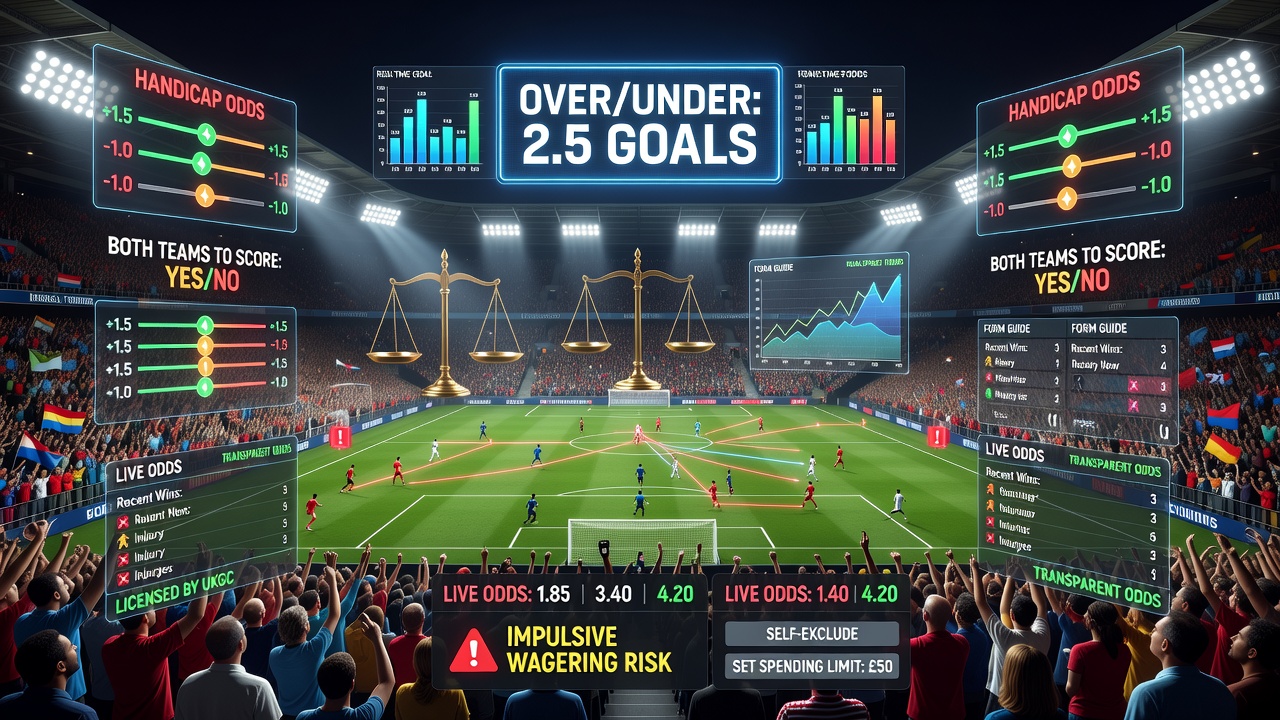
Sports betting operators now offer dozens of markets on a single match, but three remain the backbone of recreational wagering worldwide: over/under totals, handicap betting, and both teams to score. Understanding how these markets are priced and structured matters more than ever, as operators increasingly push in-play and combination bets that can obscure the actual odds a customer is accepting.
How Totals and Handicaps Actually Work
An over/under bet asks a simple question - will the combined score cross a number set by the bookmaker - but the simplicity is partly an illusion. That number is calculated using models that account for team form, scoring trends, and market liquidity, then adjusted as money comes in. A line of 2.5 goals in football is not a neutral guess; it reflects where the operator expects balanced action on both sides, which is how bookmakers manage their own exposure.
Handicap betting serves a similar commercial purpose for mismatched fixtures. By assigning a virtual deficit or advantage, operators make lopsided games commercially viable to bet on, since a heavy favorite with no handicap would attract one-sided wagering and little betting volume on the underdog side. For the bettor, the handicap changes what "winning" means - it is no longer about the final result alone, but about the margin.
Both Teams to Score and the Appeal of Compound Outcomes
The both-teams-to-score market has grown in popularity partly because it sidesteps the need to predict a winner. It rewards attacking patterns rather than results, which is why bettors often treat it as a lower-variance alternative to match-winner bets. That perception deserves scrutiny: the market still carries a built-in bookmaker margin, and its outcome remains subject to the same unpredictability as any other sports bet. No market structure changes the fact that outcomes are probabilistic, not foreseeable.
What Bettors Should Actually Weigh
Statistical research, form guides, and injury news can sharpen a bettor's understanding of probability, but none of it converts betting into a reliable income source. Odds are priced to include a margin in the operator's favor across all these markets, regardless of how the bet is framed. Comparing odds across licensed operators can affect value marginally, but it does not change the underlying mathematics.
- Payout differences between licensed operators can be meaningful over time, but they do not offset the statistical disadvantage built into any market.
- In-play betting on totals or handicaps introduces faster decision-making and higher emotional pressure, which increases the risk of impulsive wagering.
- Tools such as betting-history exports exist precisely because tracking spend and frequency helps identify harmful patterns early.
Regulators in most mature betting markets now require operators to display odds transparently and provide access to self-exclusion and spending-limit tools. Bettors who treat these markets as entertainment with a defined cost - rather than a strategy for guaranteed returns - are better positioned to avoid the harms associated with chasing losses or escalating stakes. Markets like over/under, handicap, and both teams to score can make watching sport more engaging, but they remain products built around probability and margin, not systems that can be solved.