
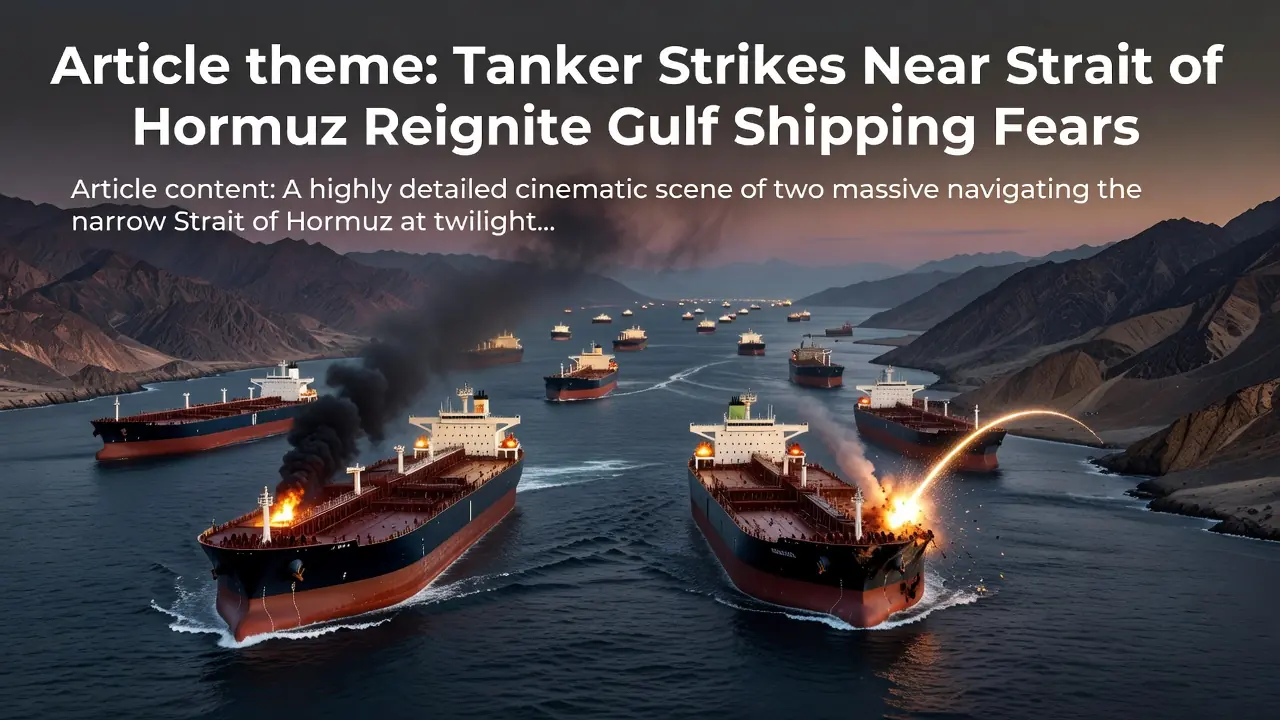
Two oil tankers were struck by unidentified projectiles while passing through the Strait of Hormuz, a waterway that carries a substantial share of the world's seaborne crude. The UK Maritime Trade Operations agency reported that one vessel suffered a small fire and a temporary blackout, while a separate crude carrier was hit on its port side near Oman. No injuries or oil spills have been confirmed, but the incident has immediately revived concerns about the safety of one of the busiest and most sensitive oil corridors on the planet.
Why This Chokepoint Matters So Much
The Strait of Hormuz sits between Iran and Oman and functions as the single passage connecting Gulf oil producers to open ocean. Tankers moving crude from Saudi Arabia, the UAE, Kuwait, Iraq and Iran all funnel through this narrow channel, which at its tightest point is only a few miles wide. Any disruption there, even a limited one, tends to ripple through global energy markets because there is no practical alternative route for that volume of maritime trade. This geography is precisely why the strait has repeatedly become a flashpoint whenever regional tensions rise.
A Pattern of Escalating Maritime Risk
Incidents involving tankers in this corridor are not new, but they tend to resurface in cycles tied to broader geopolitical friction involving Iran and its neighbors. Shipping companies, insurers and naval forces track these episodes closely because they affect everything from freight rates to insurance premiums. When attacks or near-misses occur, vessel operators often reassess routing, increase onboard security measures, or request naval escort through the strait. Insurers, in turn, may raise war-risk premiums for ships transiting the area, a cost that eventually filters into broader shipping and energy expenses.
Business and Market Implications
For the energy and shipping sectors, uncertainty in the Gulf translates into tangible operational decisions rather than abstract risk. Tanker owners must weigh the cost of rerouting against the financial exposure of continuing to use the strait. Charterers and oil majors watch these events closely because any sustained disruption to flows through Hormuz has historically pushed crude prices higher, even when actual physical damage is limited.
- Shipping insurers may adjust risk premiums for vessels transiting the Gulf.
- Naval and coalition forces often increase patrols following reported attacks.
- Energy markets tend to react quickly to perceived threats in the strait, independent of confirmed damage.
- Commercial operators may temporarily alter routes or speeds as a precaution.
What Comes Next
With no casualties or environmental damage confirmed so far, attention now turns to identifying the source of the projectiles and determining whether this marks an isolated incident or the start of a broader pattern. Regional naval forces, flag states and shipping associations are likely to issue updated guidance for vessels planning to transit the strait in the near term. Until the cause is clarified, the event stands as a reminder of how fragile stability remains along one of the world's most consequential trade routes, and how quickly that fragility can affect global energy flows.