
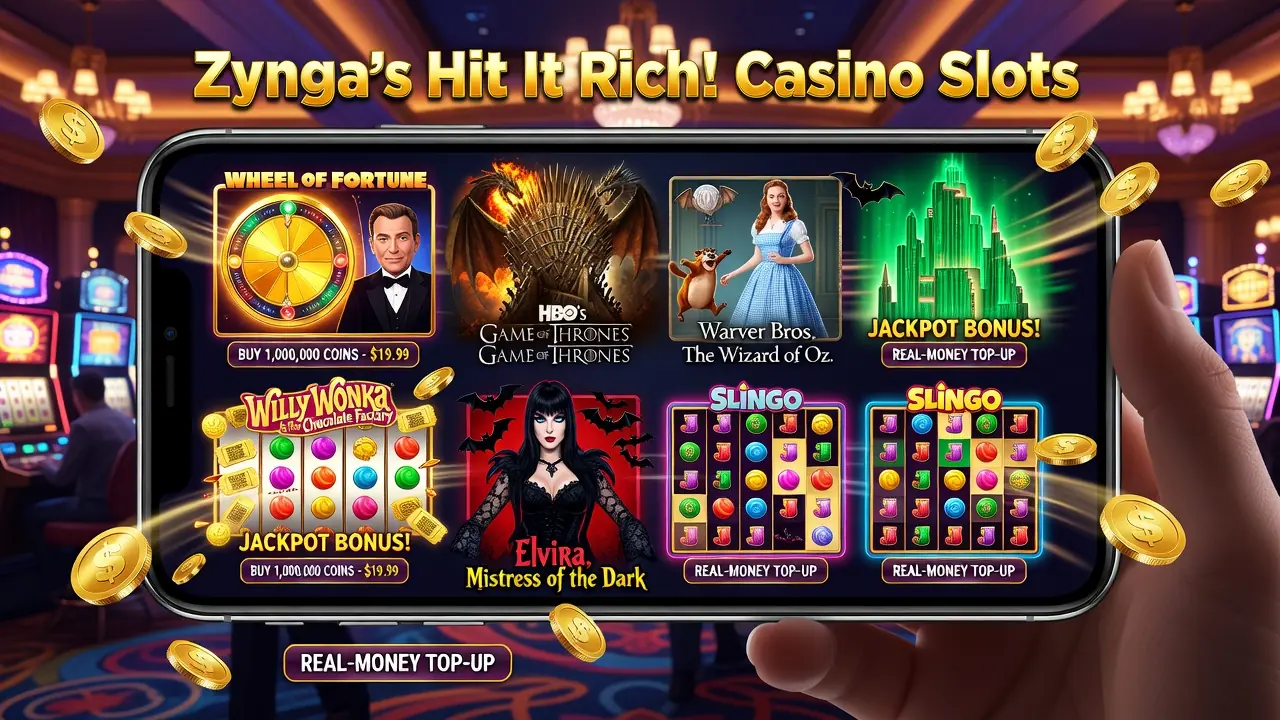
Hit It Rich! Casino Slots, Zynga's long-running social casino app, illustrates a business model that has quietly become one of the most durable in mobile entertainment: free-to-play slot simulation built around licensed entertainment properties rather than real-money wagering. The app bundles dozens of slot-style games, from an original Wheel of Fortune experience to titles tied to The Wizard of Oz, Game of Thrones and Willy Wonka & the Chocolate Factory, inside a single platform that never pays out actual cash.
A Different Product Than Online Gambling
Social casino apps occupy a distinct regulatory and commercial space from licensed online gambling operators. Players spin reels, collect virtual coins and unlock bonus rounds, but nothing converts back into real money or prizes. That distinction matters legally: because outcomes carry no cash value, these apps generally fall outside the gambling licensing regimes that govern betting shops, poker platforms or online casinos. Zynga is explicit about this in its own product disclosures, stating plainly that the app does not offer real money gambling and that success in the game does not predict success in actual wagering.
The business model instead rests on in-app purchases. Players receive free coins to start, including periodic bonuses, but the supply is finite within normal play. Topping up the virtual bankroll faster typically requires spending real money, a mechanic common across the free-to-play mobile economy, from match-three puzzlers to card games. Regulators and consumer advocates in several markets have scrutinized this model for its resemblance to gambling mechanics, particularly around the psychological pull of near-misses, bonus rounds and escalating jackpots, even when no real winnings are at stake.
Licensing as the Core Growth Strategy
What differentiates Hit It Rich! from generic slot apps is its reliance on recognizable intellectual property. Wheel of Fortune, HBO's Game of Thrones, Warner Bros.' Wizard of Oz and Willy Wonka catalog, and horror icon Elvira all appear as themed reel sets. This licensing-heavy approach is a deliberate acquisition and retention strategy: familiar characters and franchises lower the barrier to trying a new game and give returning players an emotional hook that generic symbols cannot replicate. It also requires ongoing royalty arrangements with studios and rights holders, a cost structure that shapes which franchises appear and how long they remain available.
The inclusion of Slingo, a hybrid of slots and bingo mechanics originally developed by Gaming Realms, shows how social casino operators diversify game types within one app to extend play sessions and reduce fatigue with a single format.
Transparency and the Limits of "Free"
The app's own disclosures are notable for their candor. Zynga states that the game includes optional in-game purchases, including paid random items, and points users toward in-game information on drop rates, a nod to the loot box transparency debates that have shaped app store policy and, in some jurisdictions, legislation over the past several years. The company also flags that the game requires an adult audience and an internet connection, and directs users to device settings to manage or disable purchases entirely.
For consumers, the practical takeaway is straightforward: engagement with social casino apps should be treated as entertainment spending, not investment or gambling activity with any prospect of financial return. The absence of real-money stakes removes one category of harm associated with traditional gambling, but the spending mechanics, variable rewards and frequent bonus prompts are designed using many of the same behavioral principles. Anyone managing household budgets or supervising younger users benefits from using built-in purchase controls rather than relying on the app's design to self-limit spending.
Where This Fits in the Wider Market
Social casino gaming sits at the intersection of mobile entertainment, licensing commerce and consumer protection policy. As app stores and some regulators tighten disclosure requirements around randomized paid content, platforms like Hit It Rich! are likely to face continued pressure to clarify odds, spending limits and age-gating, even without falling under formal gambling licensing. The model's durability depends less on any single franchise and more on the steady rotation of licensed content paired with purchase mechanics that keep players returning, a pattern that mirrors broader trends across free-to-play mobile gaming.