
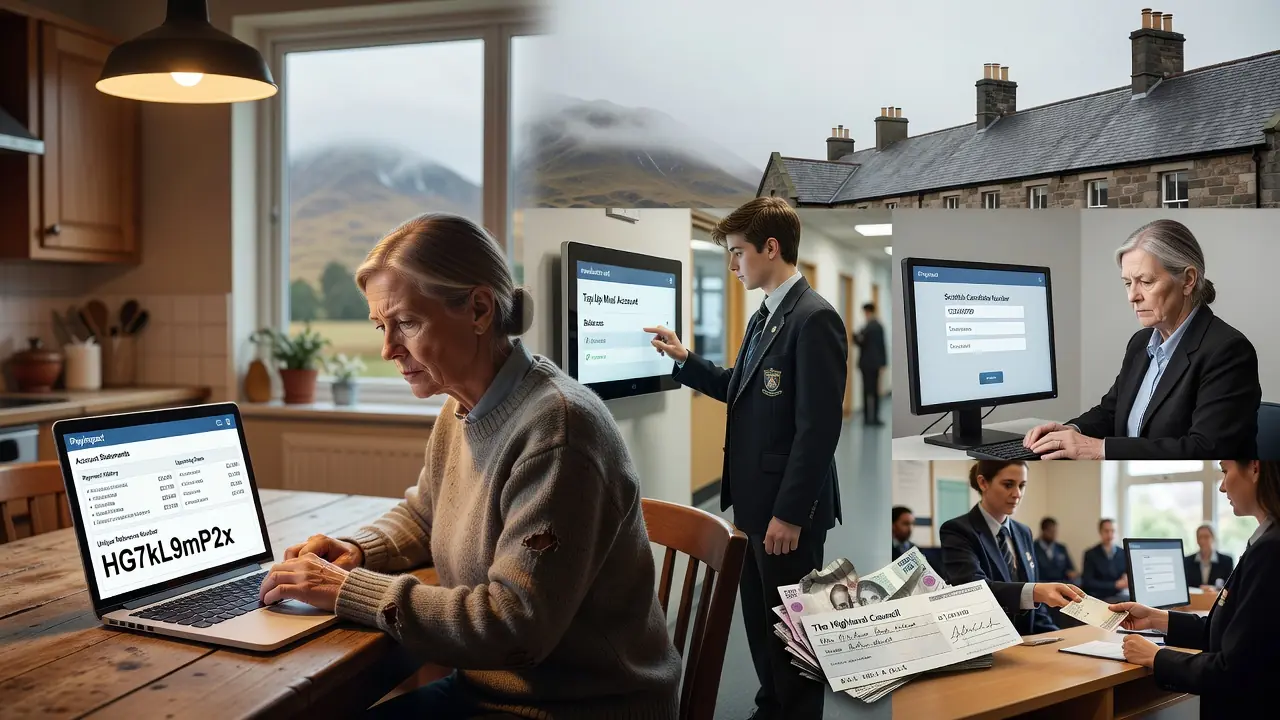
Paying for a child's school lunch has quietly become a digital transaction like any other, governed by account numbers, online portals and audit trails rather than loose change in an envelope. The Highland Council has structured its school meal payment system around two distinct identifiers, and knowing which one applies determines not just how a parent pays, but what financial oversight they can access along the way.
Two Identifiers, Two Different Experiences
The system hinges on which reference number a school has issued. A Unique Reference Number, combining uppercase and lowercase letters with digits, links to iPayimpact, a platform that gives parents visibility into account statements, payment history and upcoming dues. A Scottish Candidate Number, by contrast, is a simple nine-digit code used for online payment but without the same reporting depth - balance information is not available through this route.
This distinction matters more than it might first appear. Parents relying on an SCN are, in effect, paying blind between invoices, unable to confirm in real time whether funds have cleared or arrears remain. It is a reminder that not all "online payment" systems offer equivalent transparency, even when administered by the same local authority for the same service.
Cash, Cheques and the Limits of Digital Uptake
Despite the digital options, traditional payment methods remain available. Cash and cheques can still be handed in through the school itself, with cheques made payable directly to The Highland Council. Secondary pupils have an additional mechanism: a revaluation unit based in school, where they can top up their own meal account and check its balance without parental involvement.
This hybrid model reflects a broader pattern across UK public services, where councils retain analogue fallback options even as they push families toward digital payment rails. The rationale is practical - not every household has consistent bank access, smartphone literacy or comfort with online portals, particularly among lower-income families who may rely most heavily on subsidised or paid school meal schemes.
Outstanding Balances and Administrative Follow-Up
Where a family receives an invoice for outstanding meal charges, that balance can also be settled online, separate from routine day-to-day payments. This indicates the council operates a structured arrears process rather than simply blocking service, a detail that matters for parents trying to understand how missed payments are handled administratively.
For anything beyond the standard payment flow - linking a child's account, requesting a refund, or resolving a payment dispute - the responsibility sits with Catering Services directly. That centralisation suggests the council treats meal payments as a discrete financial service line, with its own support channel rather than being folded into general school administration.
Why the Payment Architecture Matters
- Different reference numbers unlock different levels of financial visibility, which affects how easily parents can track spending.
- Retaining cash and cheque options preserves access for families without reliable digital banking tools.
- Separating invoice payments from routine top-ups points to a formal arrears management process.
- A dedicated Catering Services contact point centralises account and refund queries, reducing ambiguity for parents.
None of this is dramatic, but it illustrates how local government payment systems are increasingly built on the same principles seen in consumer fintech: identity verification, tiered account access and layered support channels - applied here to something as routine as a child's lunch.