
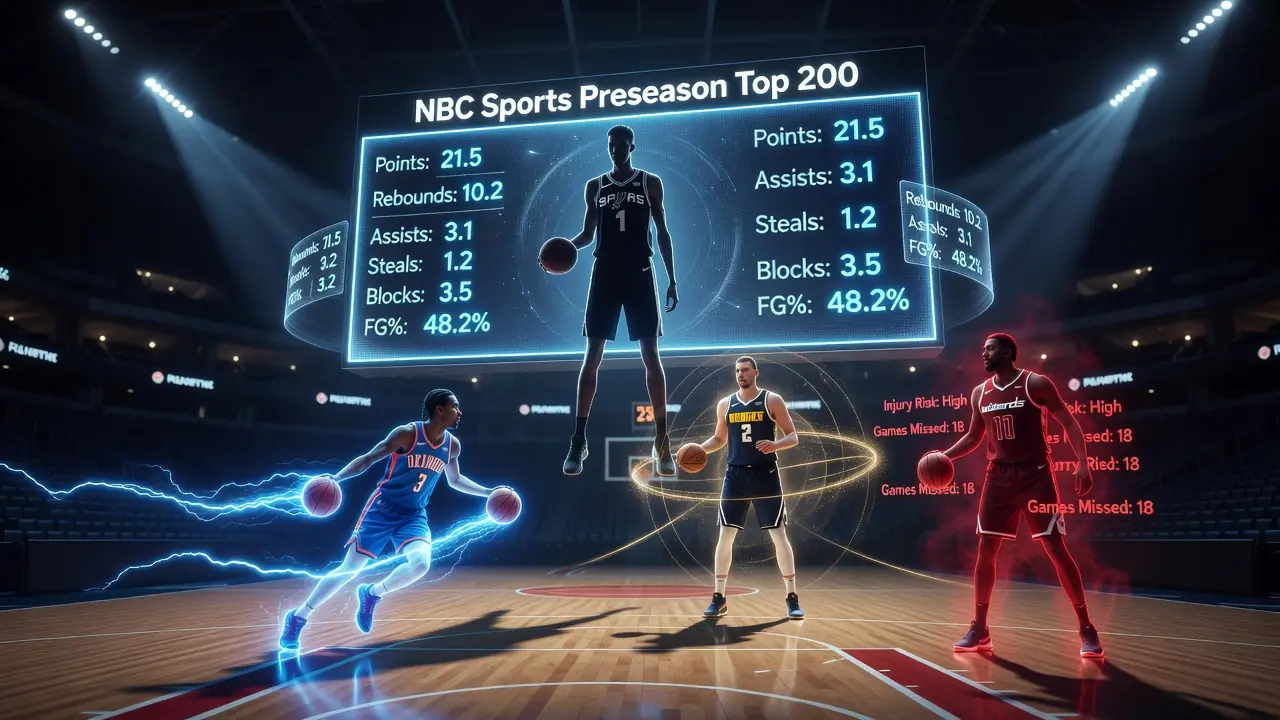
NBC Sports has released the first edition of its preseason Top 200 fantasy basketball rankings, a list that will be refreshed weekly once the regular season tips off. The rankings arrive as fantasy managers begin draft preparation, and this year's order hints at a potential shift at the very top of the sport's fantasy landscape.
For several seasons, Denver's Nikola Jokić has sat atop most fantasy boards, a near-automatic selection given his statistical range across scoring, rebounding and playmaking. This year, San Antonio's Victor Wembanyama leads the list instead, with Oklahoma City's Shai Gilgeous-Alexander rounding out a top three that reflects both proven production and emerging upside.
Why Rankings and Draft Position Aren't the Same Thing
A recurring point of confusion among newer fantasy players is treating a ranking sheet as a literal draft order. The two are related but distinct. Rankings reflect projected value across a full season under a specific scoring format - in this case, nine-category leagues that weigh points, rebounds, assists, steals, blocks, turnovers, three-pointers, field-goal percentage and free-throw percentage. Where a player actually goes in a live draft depends on positional scarcity, league-mate tendencies and individual risk tolerance.
Washington's Anthony Davis illustrates this gap clearly. His per-game numbers, when healthy, rank among the best in fantasy basketball. But his history of missed games means drafting him at his ranked slot carries real exposure - a manager could lose a roster spot for extended stretches. Ranking lists capture talent and ceiling; they do not fully price in availability risk, which is why experienced drafters often adjust rankings downward for players with injury patterns.
The Format Matters More Than Casual Players Realize
Nine-category leagues reward a different type of player than simpler formats built around total points or head-to-head scoring alone. A center who shoots a high percentage from the field but struggles at the free-throw line, for example, can hurt a roster in one category while helping it in another. Turnovers count against a player too, which is why some high-usage guards rank lower than their scoring numbers alone might suggest.
This nuance is why publications like NBC Sports pair rankings with player profiles rather than releasing a bare list. Context - injury history, role changes, coaching tendencies, shooting splits - shapes how a name should be valued relative to its number on the page.
What Weekly Updates Reflect About the Fantasy Industry
The decision to update rankings weekly throughout the season, rather than publish a static preseason list, mirrors how the broader fantasy and sports-data industry has evolved. Injuries, trades, role changes and shifting rotations can alter a player's value within days. Outlets that maintain live rankings are responding to a user base that treats fantasy sports as an ongoing analytical exercise rather than a one-time draft decision.
- Rankings are format-specific and should not be treated as universal value statements
- Injury history and availability risk often matter as much as per-game production
- Category-based formats reward balanced statistical profiles over raw scoring
- Weekly updates reflect how quickly player value can shift during a season
For fantasy participants, the practical takeaway is straightforward: use ranking tools as one input among several, cross-reference them against league-specific scoring rules, and weigh risk factors like health and role stability before locking in a draft strategy.